officialsevot@gmail.com
July 9, 2026
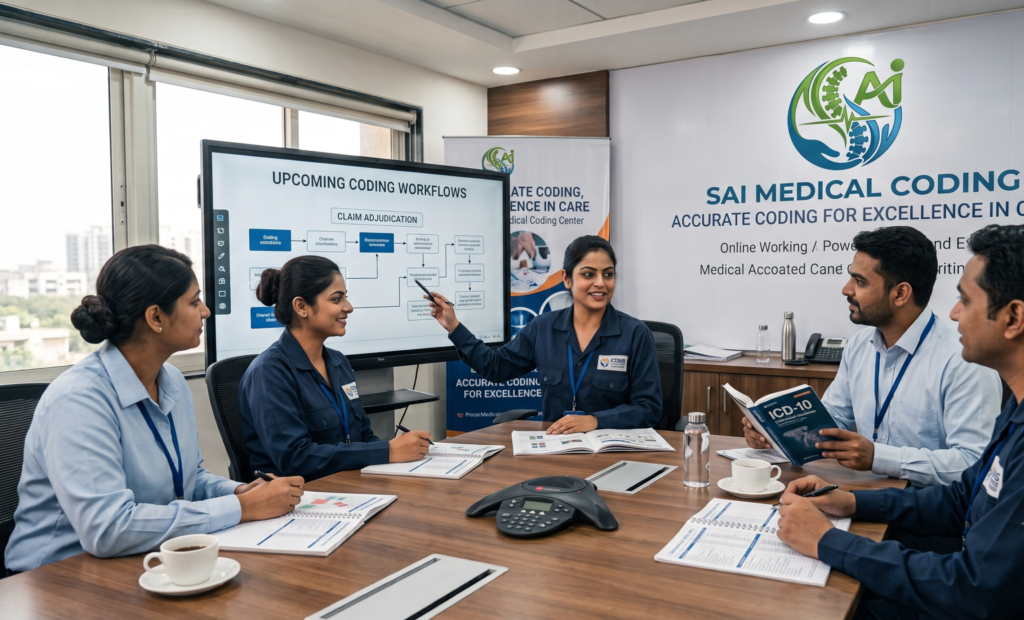
Healthcare is one of the fastest-growing industries, creating thousands of opportunities for trained professionals every year. Among these careers, medical coding jobs have become increasingly popular because they combine healthcare knowledge with analytical and technical skills.
If you’re a recent graduate wondering how to begin your career, this guide explains everything you need to know about medical coding jobs for freshers, including eligibility, required skills, career growth, and how the right training can prepare you for success.
Medical coding jobs involve reviewing patient medical records and converting diagnoses, treatments, and procedures into standardized medical codes. These codes are essential for insurance claims, billing, healthcare documentation, and maintaining accurate patient records.
Medical coders work closely with healthcare providers, hospitals, insurance companies, and healthcare service organizations to ensure documentation follows industry standards.
The healthcare sector continues to expand, leading to a growing need for accurate medical documentation.
Medical coding professionals help healthcare organizations by:
Maintaining standardized medical records
Supporting insurance claim processing
Reducing billing errors
Improving documentation quality
Ensuring coding compliance
As healthcare systems become more technology-driven, skilled medical coders remain an important part of the industry.
One of the biggest advantages of medical coding is that graduates from various healthcare backgrounds can pursue this career.
Eligible candidates often include:
B.Pharm Graduates
Pharm.D Graduates
B.Sc Nursing Graduates
M.Sc Nursing Graduates
BPT Graduates
MPT Graduates
B.Sc Life Science Graduates
Biotechnology Graduates
Microbiology Graduates
Zoology Graduates
Biochemistry Graduates
Allied Health Science Graduates
Fresh graduates with a strong interest in healthcare documentation can also prepare for medical coding through professional training.
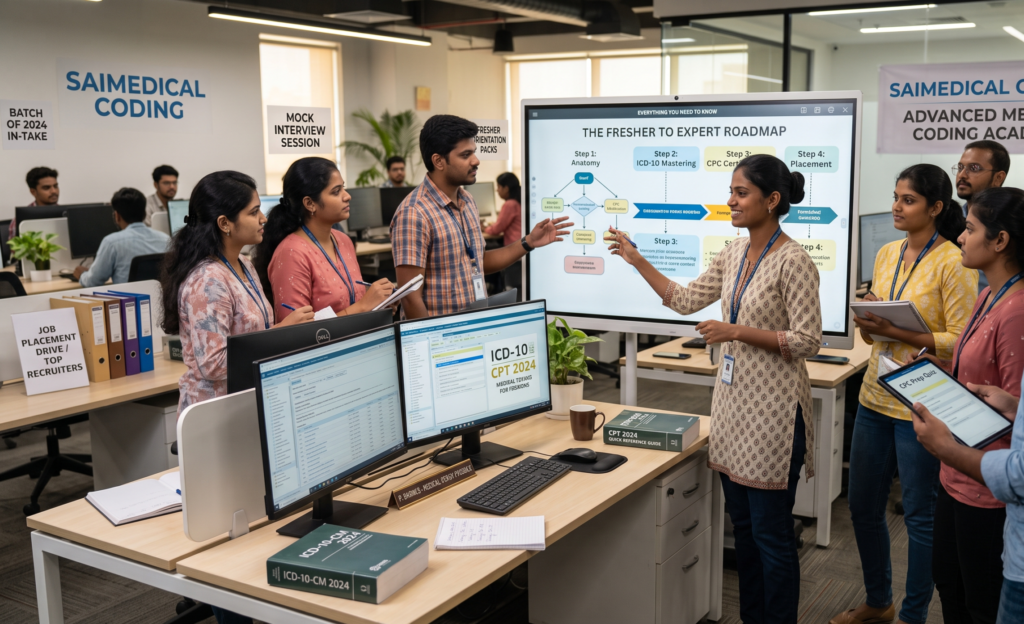
Employers look for candidates with both technical knowledge and soft skills.
Important skills include:
Understanding medical terms helps coders accurately interpret patient records.
Knowledge of the human body is essential for assigning appropriate medical codes.
Medical coders should understand
ICD
CPT
HCPCS
These coding systems form the foundation of professional medical coding.
Even small documentation errors can affect coding accuracy, making attention to detail an essential skill.
Medical coding professionals use healthcare software and electronic medical records throughout their workday.
Many students believe experience is required before entering the industry. However, medical coding jobs for freshers are available for candidates who possess strong coding knowledge and practical training.
Employers typically evaluate:
Coding fundamentals
Medical terminology
Practical coding exercises
Communication skills
Interview performance
Learning ability
Students who practice coding regularly often feel more confident during recruitment.
Medical coding professionals find opportunities in multiple healthcare settings.
These include:
Hospitals
Multi-specialty clinics
Medical billing companies
Insurance organizations
Healthcare BPOs
Revenue Cycle Management companies
Healthcare consulting firms
The variety of employers allows professionals to explore different career paths within healthcare.
Medical coding offers structured career progression.
Common career path:
Medical Coding Trainee
Junior Medical Coder
Medical Coder
Senior Medical Coder
Quality Analyst
Medical Coding Auditor
Team Leader
Operations Manager
With additional certifications and experience, professionals can specialize in inpatient coding, outpatient coding, auditing, or quality assurance.

If you’re planning to enter this field, follow these steps:
Build a strong understanding of healthcare language.
A solid medical foundation improves coding accuracy.
Practice ICD, CPT, and HCPCS coding concepts regularly.
Work on coding scenarios and real-world medical documentation.
Prepare for technical and HR interviews through mock interview sessions.
Professional training helps bridge the gap between academic knowledge and industry expectations.
A structured medical coding program provides:
Step-by-step learning
Practical coding exercises
Experienced trainers
Industry-oriented curriculum
Certification guidance
Interview preparation
Placement assistance
This combination helps students become job-ready with greater confidence
Choosing the right training institute is an important step toward building a successful career.
Sai Medical Coding offers:
Flexible online and offline learning
Easy-to-follow curriculum
15+ years of experienced trainers
62 hours of comprehensive training
Medical Coding Prime Basic Course
IPDRG training
AHIMA certification guidance
AAPC certification guidance (CPC & CIC)
Practical coding sessions
Interview preparation
Placement support
Our focus is to help students develop the skills required by today’s healthcare industry.
The demand for medical coding jobs continues to grow as healthcare organizations require skilled professionals to maintain accurate medical documentation. With the right knowledge, practical training, and continuous learning, fresh graduates can confidently begin their careers in this rewarding healthcare profession.
Investing in quality training today can prepare you for long-term success in the medical coding industry.
Yes. Many healthcare organizations recruit fresh graduates who have completed medical coding training and possess strong coding fundamentals.
Life science, pharmacy, nursing, physiotherapy, biotechnology, microbiology, and allied health graduates are commonly eligible.
Professional certifications can strengthen your profile and improve career opportunities, although requirements vary by employer.
Medical terminology, anatomy, coding systems, analytical thinking, attention to detail, and computer skills are among the most important.
Yes. Medical coding offers continuous learning, career progression, specialization opportunities, and growing demand within the healthcare industry.
Sai Medical Coding is a leading training institute guaranted on building skilled medical coders. We provide industry-level training, real-time practice, and placement support to help you succeed in your career.
©2026 Sai Medical Coding. All Rights Reserved.
Crafted With Care By Sevot.in
WhatsApp us