What Is Medical Coding? A Complete Beginner's Guide
If you’re exploring careers in healthcare that don’t involve direct patient care, you’ve probably come across the term medical coding. But what is medical coding, and why is it becoming one of the most sought-after careers in the healthcare industry?
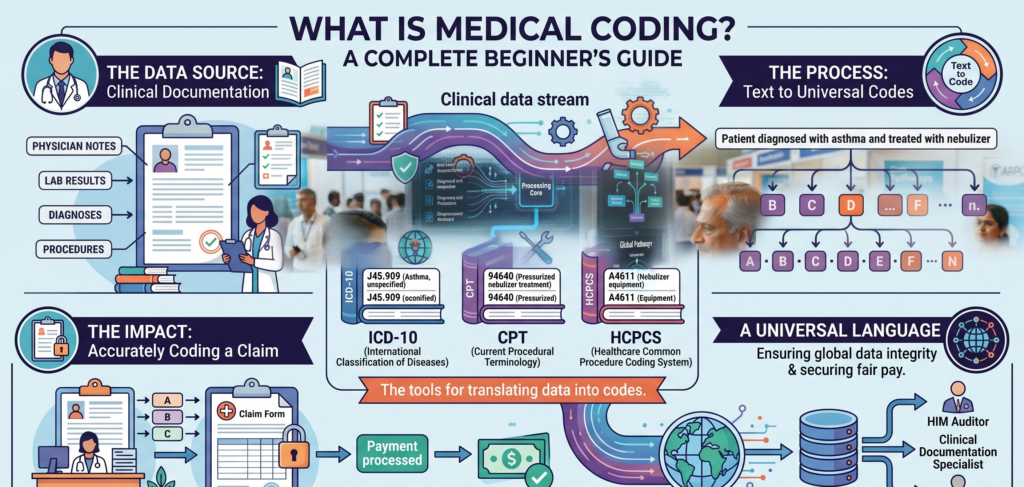
Medical coding is the process of converting healthcare diagnoses, treatments, procedures, and medical services into standardized alphanumeric codes. These codes are used by hospitals, insurance companies, and healthcare organizations to maintain records, process claims, and ensure accurate reimbursement.
With the healthcare industry expanding rapidly, medical coding professionals are increasingly in demand.
What Is Medical Coding?
Medical coding involves reviewing patient records and translating medical information into universally accepted codes.
These codes help healthcare providers:
Process insurance claims
Maintain accurate patient records
Ensure regulatory compliance
Analyze healthcare data
Reduce billing errors
Medical coders act as a bridge between healthcare providers and insurance companies.

Why Is Medical Coding Important?
Without proper coding, healthcare systems would struggle to function efficiently.
Medical coding helps:
Standardize medical documentation
Improve claim accuracy
Speed up reimbursements
Support healthcare analytics
Minimize fraud and billing discrepancies
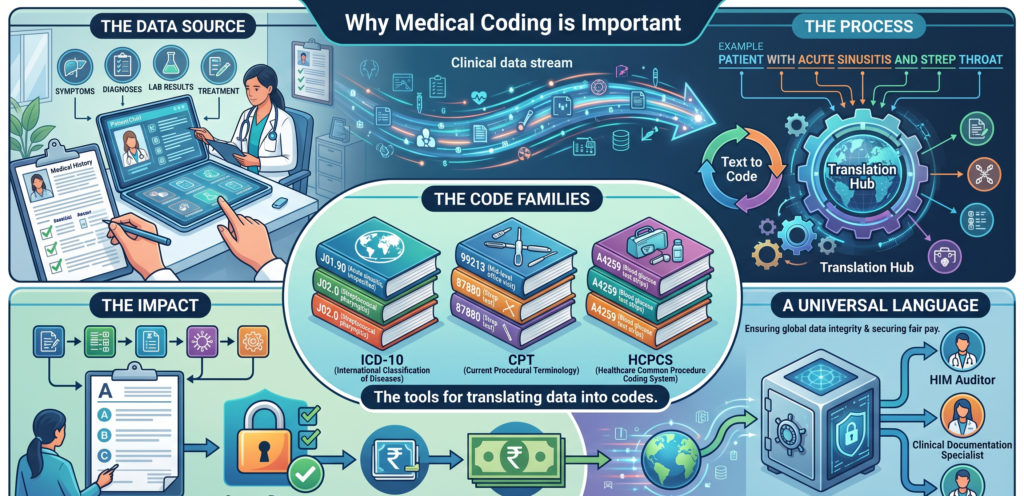
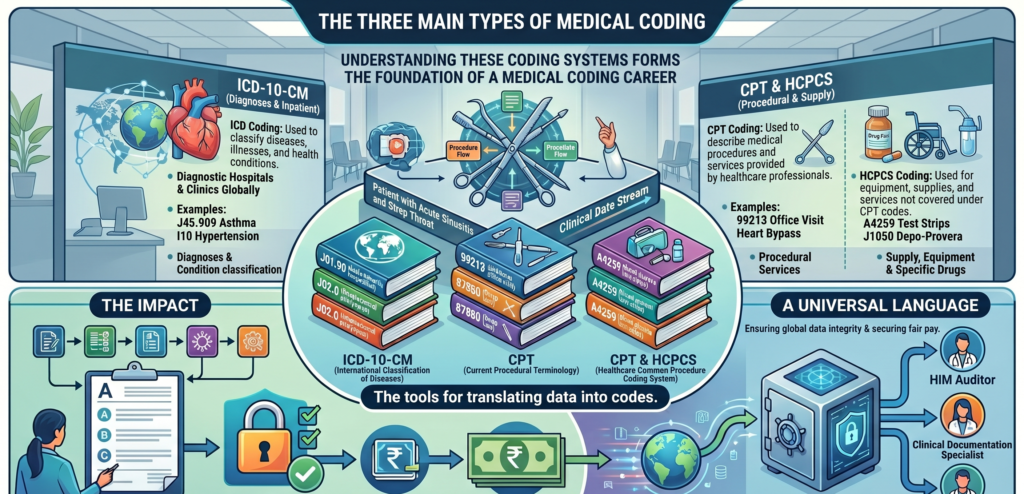
The Three Main Types of Medical Coding
ICD Coding
Used to classify diseases, illnesses, and health conditions.
CPT Coding
Used to describe medical procedures and services provided by healthcare professionals.
HCPCS Coding
Used for equipment, supplies, and services not covered under CPT codes.
Understanding these coding systems forms the foundation of a medical coding career.
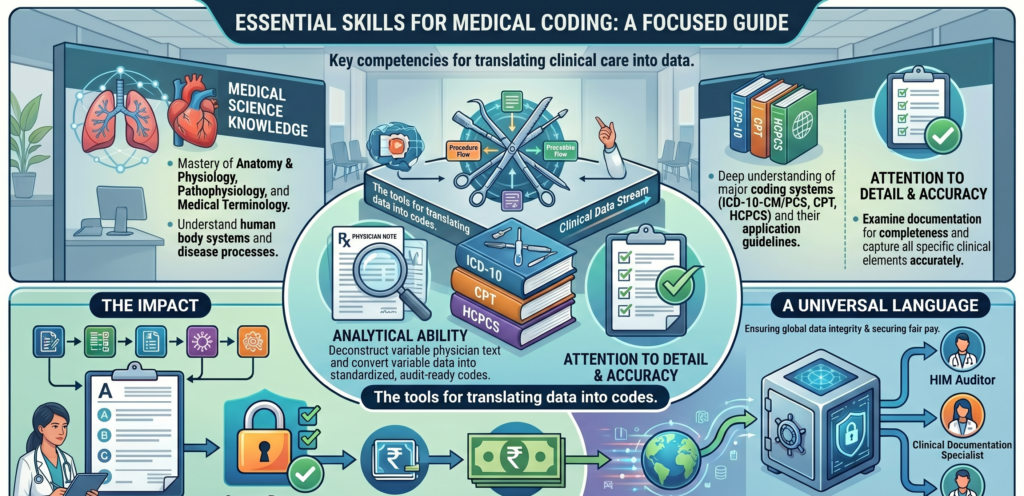
Skills Required for Medical Coding
Successful medical coders possess:
Attention to detail
Analytical thinking
Basic medical terminology knowledge
Understanding of anatomy and physiology
Computer proficiency
Time management skills
These skills can be developed through proper training.
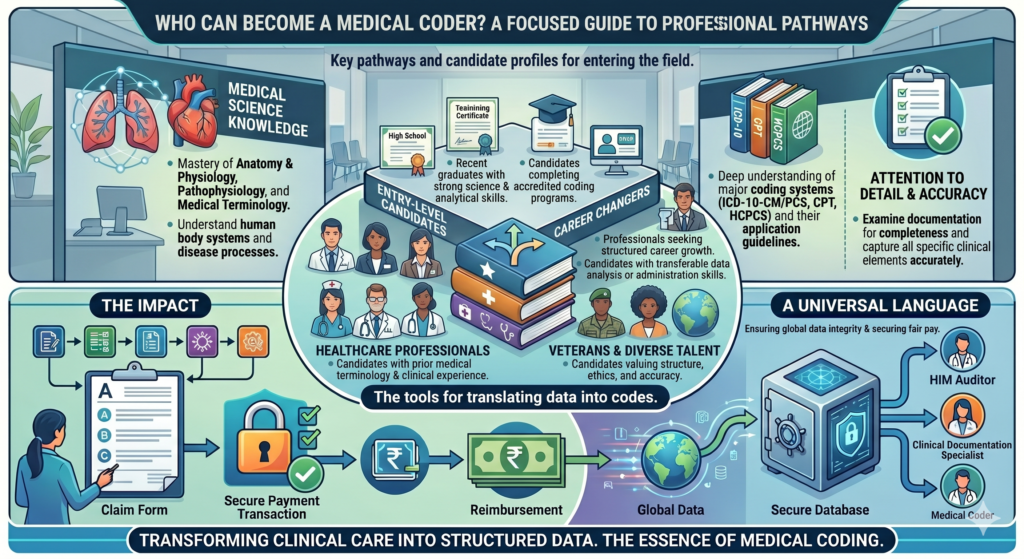
Who Can Become a Medical Coder?
Medical coding is suitable for:
Life science graduates
Pharmacy graduates
Nursing graduates
Allied health professionals
Fresh graduates interested in healthcare careers
Even beginners can enter this field with structured training.
Career Opportunities in Medical Coding
Medical coders can work in:
Hospitals
Clinics
Insurance companies
Revenue cycle management firms
Healthcare BPOs
Medical billing companies
As experience grows, professionals can advance into auditing, quality analysis, and leadership roles.
How to Start a Career in Medical Coding
To begin your journey:
Learn medical terminology.
Understand coding systems.
Enroll in a professional training program.
Practice with real-world examples.
Prepare for interviews.
The right guidance can help you build confidence and job readiness.
Conclusion
Understanding what medical coding is is the first step toward entering one of healthcare’s fastest-growing professions. With proper training, dedication, and continuous learning, medical coding can offer a rewarding and stable career path.
Frequently Asked Questions
Is medical coding a good career?
Yes. Medical coding offers opportunities for growth in the healthcare industry.
Can freshers learn medical coding?
Absolutely. Many training programs are designed for beginners.
Is medical coding difficult?
With proper training and practice, medical coding becomes easier to understand and apply.
What qualifications are required?
Life science and healthcare-related graduates are often preferred, although eligibility varies.
Can medical coders work in hospitals?
Yes. Hospitals are among the largest employers of medical coders.